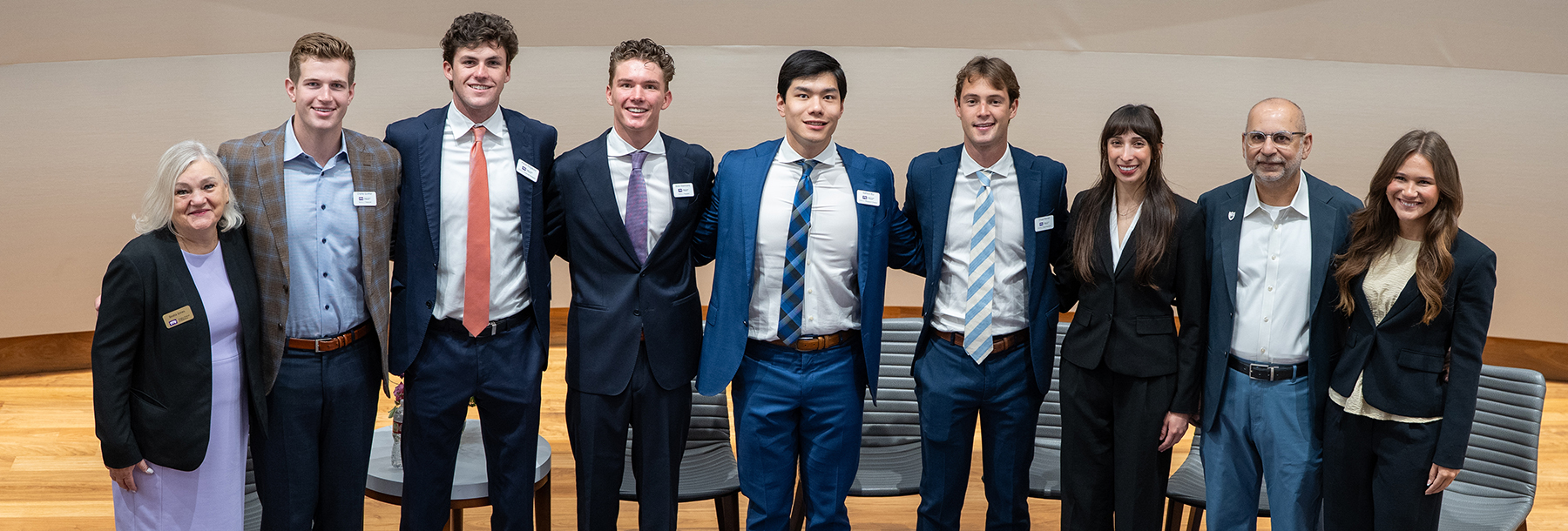
At the inaugural AI Symposium, leaders from Dell, Gartner, Alcon and Dallas AI joined industry professionals and students to explore applications of AI, workforce implications and the skills needed to navigate an evolving, technology-driven business environment.
April 29, 2026
By Shelby Northrup
Content Creator, Neeley Communications
Artificial intelligence is rapidly reshaping how organizations operate, make decisions and develop talent. At the inaugural Neeley AI Symposium, students and industry leaders gathered on the Texas Christian University campus to examine that shift and how to apply it in real-world business and academic environments.
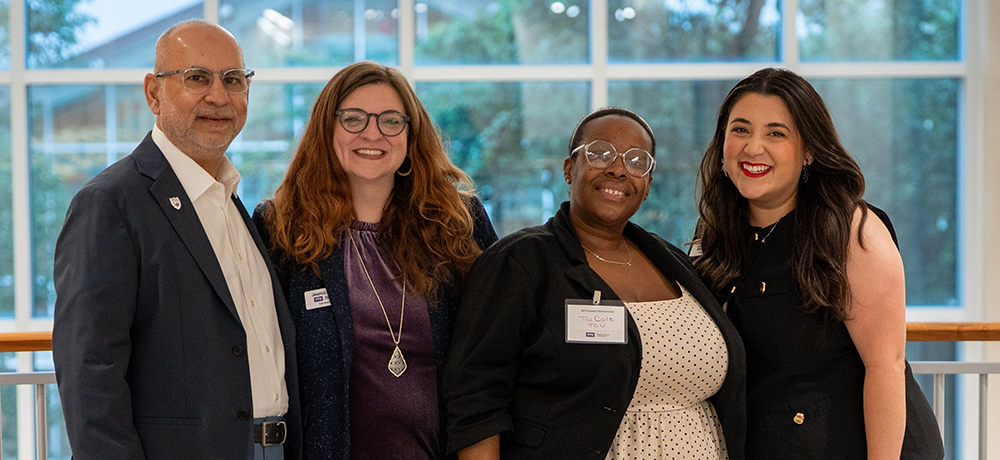
Symposium participants explored the evolution of AI with small-group networking and panels of industry leaders, who discussed their perspectives on technology, cybersecurity and workforce strategy in an AI-driven environment.
The symposium is one of the first events developed by leaders of the AI Forward initiative, launched earlier this year by Craig Crossland, the John V. Roach Dean for the Neeley School of Business, to coordinate and advance the integration of artificial intelligence across the school’s curriculum, research and operations. Will Drover, who serves as advisor to the dean for AI and digital innovation and is the chair for the Entrepreneurship and Innovation Department, said that the initiative and the event reflect a broader effort to prepare students and organizations to navigate AI with technical understanding and informed judgment.
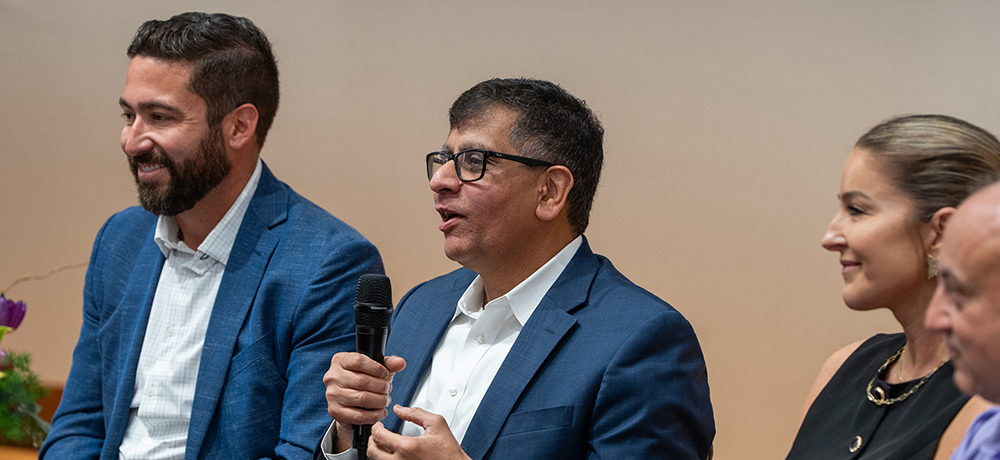
Neeley Associate Professor Zain Ali, who also serves in a leadership role for AI Forward, led the panel discussion with industry experts, all of whom are also serving on the newly established AI Foward Advisory Board.
- Robby Dally ’06, ‘11 MBA, a data science and business intelligence expert
- Deepak Seth, senior director and analyst with Gartner
- Scarlett Jazesf, vice president of human resource business partner at Dell
- Parrish Gunnels, ’98 MBA, chief information and security officer at MVB Financial Corp.
- Babar Bhatti, co-founder and executive VP of Dallas AI and founder of Prism
Their conversations defined the symposium’s core themes on agentic AI, applications, and the effects of artificial intelligence in the classroom and the workplace, while also addressing how organizations are adapting to the pace of change.
Throughout the event, the speakers balanced optimism for the technology with a grounded view of its current capabilities and trajectory, emphasizing both the massive potential and the importance of thoughtful use.
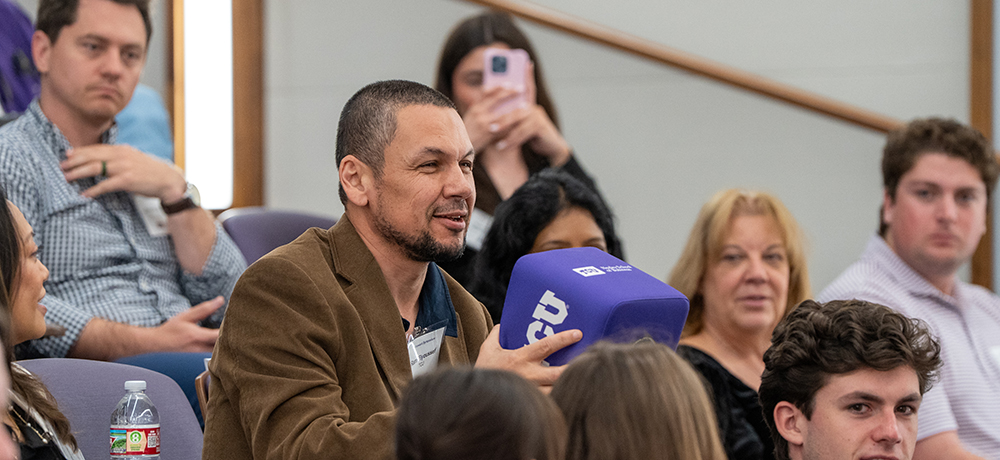
“Where we are with AI today feels like where we were with electricity 100 years ago,” said Seth, who has previously taught in Neeley as an associate professor. “A lot of the conversation around AI right now is what technology is, not what it can do.”
The symposium content offered a range of perspectives from technical insights to career-focused conversations. Sessions highlighted the opportunity for AI to intersect with any industry while also equipping students and professors at TCU with practical ways to engage with the emerging tools.
“Be known for being that person that is innately curious. There’s a big opportunity for young people to jump ahead of the curve and learn this technology,” said Jazesf.
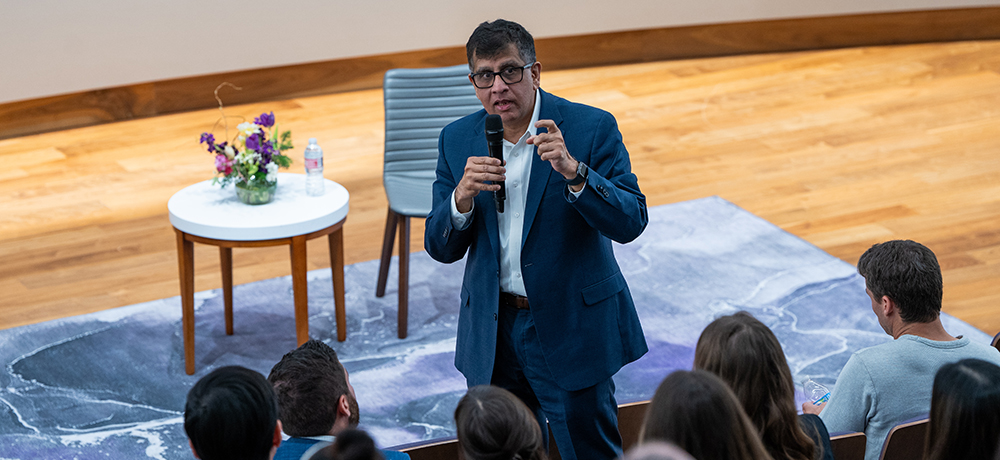
During the networking lunch, 20 industry partners facilitated mentoring sessions, an aspect of the symposium that students highlighted as valuable, direct access to industry leaders, many of whom have successfully integrated the technology into their careers.
“Beyond the presentation aspect, students can gain from the people presenting. The networking opportunity is huge for students; building those relationships is a huge factor when applying for jobs,” said Blake Steensland, a sophomore majoring in accounting and finance with an emphasis in real estate. Steensland is also the co-founder of the Neeley AI Leadership student club.
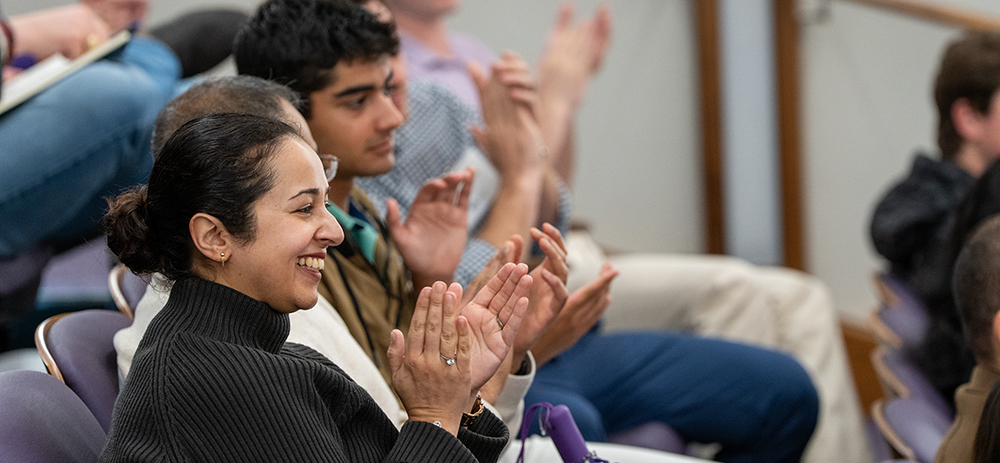
The symposium reinforced a clear reality: success in the evolving workplace will depend on the ability to evaluate, question and apply AI effectively. Neeley is advancing that work by connecting real-world challenges to the classroom and building the AI literacy students need to lead.